

Brief History of Tattoos

 Tattoos and Hepatitis C
A recent study published in the medical journal Hepatology, confirms the definite link between tattoos and hepatitis C. This study authored by researchers (Kerrilynn Carney and colleagues) at NYU Langone Medical Center, New York studied almost 2000 patients, and for the first time controlled for IV drug use, blood transfusions, and other commonly associated risk factors for hepatitis C.
The results confirmed that:
“Tattooing is associated with HCV infection, even among those without traditional HCV risk factors such as injection drug use and blood transfusion prior to 1992.”
The end result as this information spreads will be that the society at large will begin to associate hepatitis C with tattoos alone, just as it associates IV drug use with HIV and Hep C. When you go to the doctor and they see a tattoo, they will begin to test for Hep C simply because of this common and proven association.
People could begin to avoid drinking beverages after others with tattoos for fear they are drinking after a person with Hep C.
As youths assert their independence on their journey to adulthood, many choose to make an impulsively bold statement permanently on their body, they get a tattoo. Too many of them choose a neighborhood artist with a tattoo machine as their tattooist of choice.
These untrained individuals expose their clients and themselves to potentially deadly infectious diseases. Sitting in the back of corner stores or in neighborhood beauty salons, they set up shop with limited knowledge of infection control, exposure risks, or blood product disposal practices. Because they haven’t been properly trained, many unknowingly and frequently unintentionally, are putting all of us at risk. These ‘make-shift’ tattoo parlors are springing up everywhere in both urban and rural environments, and local health departments don’t have the resources, or community mandate, to crack down on this growing threat to public health.
While getting a tattoo is trendy and widespread, young people’s ability to access a tattoo varies greatly. If you have money, you can buy a well-thought-out elaborate tattoo with great art work for a few hundred dollars. When you don’t have access to money, you can go to Big Jim’s house and get a tattoo for $40. The difference, aside from the quality of art, depth, clarity, and colors is the homemade tattoo potentially comes with a life-long infection, the most common of which is hepatitis C.
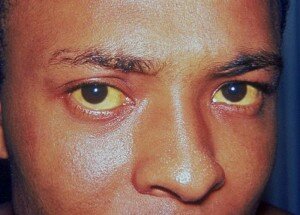 A recent study from Massachusetts, and reported by the Center for Disease Control, discussed a rise in the incidence of Hepatitis C among young people age 15 to 24. The increase was equally seen in both men and woman. While the overall occurrence of Hepatitis C in people of all ages is going down, the incidence is this targeted group is curiously rising. A detailed look at the data showed that drug use (especially IV drug use) and an increased presence of tattoos occurred much more frequently in the Hepatitis C identified patients. Sharing needles of any kind (IV drugs or tattoo needles as done in unregulated tattoo environments) presents a great risk to the general public.
The major problem with hepatitis is identifying the source and time of infection. A recently acquired hepatitis infection can look just like the average flu in younger people, who essentially are ‘down’ a few days with fatigue, muscle aches, and nasal or sinus congestion. Because of these mild initial symptoms, many teens are acutely infected, stay home a few days, never see a doctor, and recover enough to spread it on to the next victim. Neither has a clue that a potentially life altering disease is thriving inside of them. They then decide to get a tattoo in someone’s basement or backyard and the infections continue unaltered, thus the rise in the incidence of hepatitis C in young people alone!
 There are between 5 and 7 million people infected with Hepatitis B and C, and as much as two thirds of them have no idea that they’re infected. This is a problem. Since they don’t know they’re infected, they don’t seek medical attention, and they don’t know to be extra careful with contamination, and neither does the corner store tattooist.
If the CDC recommends not sharing tooth brushes, nail clips, or razors if hepatitis is present, surely sharing a tattoo needle, ink tubing, and Vaseline would be out of the question. The amateur tattooists don’t know about universal precautions, and don’t make enough money to afford the waste of materials needed to properly protect each person getting a tattoo. The 3 to 5 million “carriers” of hepatitis don’t know to be careful, and the rest of us don’t know to avoid their blood.
Watch this report on a new study and a tattoo artist’s take on Hep C.
Don’t take my word for it, check out the links below. . .







Related Articles


Take a look at the National Institute of Health (NIH) site and what it says about tattoos and Hepatitis C. http://www.ncbi.nlm.nih.gov/pubmedhealth/PMH0001329/
Here’s another government resource on Hep C. http://digestive.niddk.nih.gov/ddiseases/pubs/hepc_ez/
It’s called the silent epidemic . . .http://www.epidemic.org/theFacts/hepatitisC/silentEpidemic/
Thanks for the great information.
One can get very serious and uinafpl tattoo infections from a needle that hasn’t been properly sterilized, even if you’ve had 10 successful tattoos before without any complications.Nearly all complaints of tatoo infections today are from unlicensed practitioners, so patronizing approved tattoo shops should eliminate this serious concern.While often a concern of “tattoo virgins,” anyone can get an infection, mo matter how much ink they have. Infections, and very especially resistant strains of Staphylococcus aureus (or simply staff), are a major concern that can be simply and effectively at bay by making sure the artist is using properly sterilized equipment.It is not unreasonable or rude or un-cool for you to ask to see their licence – they are usually required to be up on the wall somewhere customers can see.
Kat I only have a few words about Tattoos. I think they are beautiful. But I look at all these young girls with their toattos and say to myself. Beautiful now but what about thirty years from now.
Great post, you have pointed out some good tattoo details , This is a great websiteT
I never thought about the connection between tattoos and hepatitis but it makes sense. Thanks for the thinking points.
Thanks.
Anyone have before and after ptecuris of thier own tattoo removal?I’am going to be have my Nautical Star (Black and Red) removed from my upper arm, it is about 2 1/2 in. by 2 1/2 in. I was told that black and red are the easier to remove. I would like to talk to someone who can relate. Please dont critisize and tell me how dumb I was to get it done. THANKS
Superior composition. Thanks for increasing awareness of hepatitis.
I have read about people tetging Hepatitis C from tatoos. Unless much mistaken, this is the same disease actress Pam Anderson got few years back. Although not having read anything else about how she’s doing, back then they were saying it “was a death sentence”. In her case it involved tattoos; either she got the disease directly from it or through her then husband, the musician.Another celebrity who is said to have had such disease, was Naomi Judd. One way of finding out all dangers regarding tattoos, hepatitis C, and related disease, is to just type any question on the internet address bar.
Lasers hair removal would have to be borfee the tattoos. For obvious reasons the lazer can simply have a detrimental effect on your tattoo. It’s the same principle with lasers being using to remove tattoos. Lasers + tattoos = not good hence it’d be best to have it done borfee.FX
How come no ones talking about this??????
Yes, I know LOTS of people who have gttoen Hep C through tattoos. Hepatitis A & B have vaccines, but there is no vaccine for Hep c (HCV) which is a disease that is transmitted by blood to blood contamination. And the thing that makes HCV (and HBV) so contagious is that it can live outside the human body for days, on instruments like needles and in the ink, too. A reputable tattoo shop will use new, disposable needles that are to be opened right in front of you. The ink should be poured into small containers then the leftover ink should be thrown out, not reused. The tattoo artist should be wearing gloves, and the environment should be clean. If all those things happen, then you won’t get HCV from a tattoo.I was diagnosed seven years ago with HCV. I never had a tattoo. My husband and I ride motorcycles with many of our friends who are bikers. I’ve been teased many times because I won’t get a tattoo, but after having to give myself interferon injections three times a week for 6 months, I don’t want to take a chance of exposing myself to a HCV risk factor. I cleared the virus on the chemotherapy treatment and don’t want to go through it again if I don’t have to. You will need to do the research and make an educated decision. Best wishes to you.
Hepatitis is a “blood borne” (meaning carried in the blood), ielnlss. The reason why there is a high incidence of “hepatitis” from getting “tattoo’s” is not the “operator” who is doing the tattooing, but the fact that some places where tattoos are done do not use proper cleaning technique. The hepatitis is spread from “client to client”, via the small droplets of blood on the dirty needles. However, if the institution that you are going to for your tattooing is using proper sterilization techniques then you have nothing to worry about.
Cool blog,looking to communicate